FlameAI
Project Description:
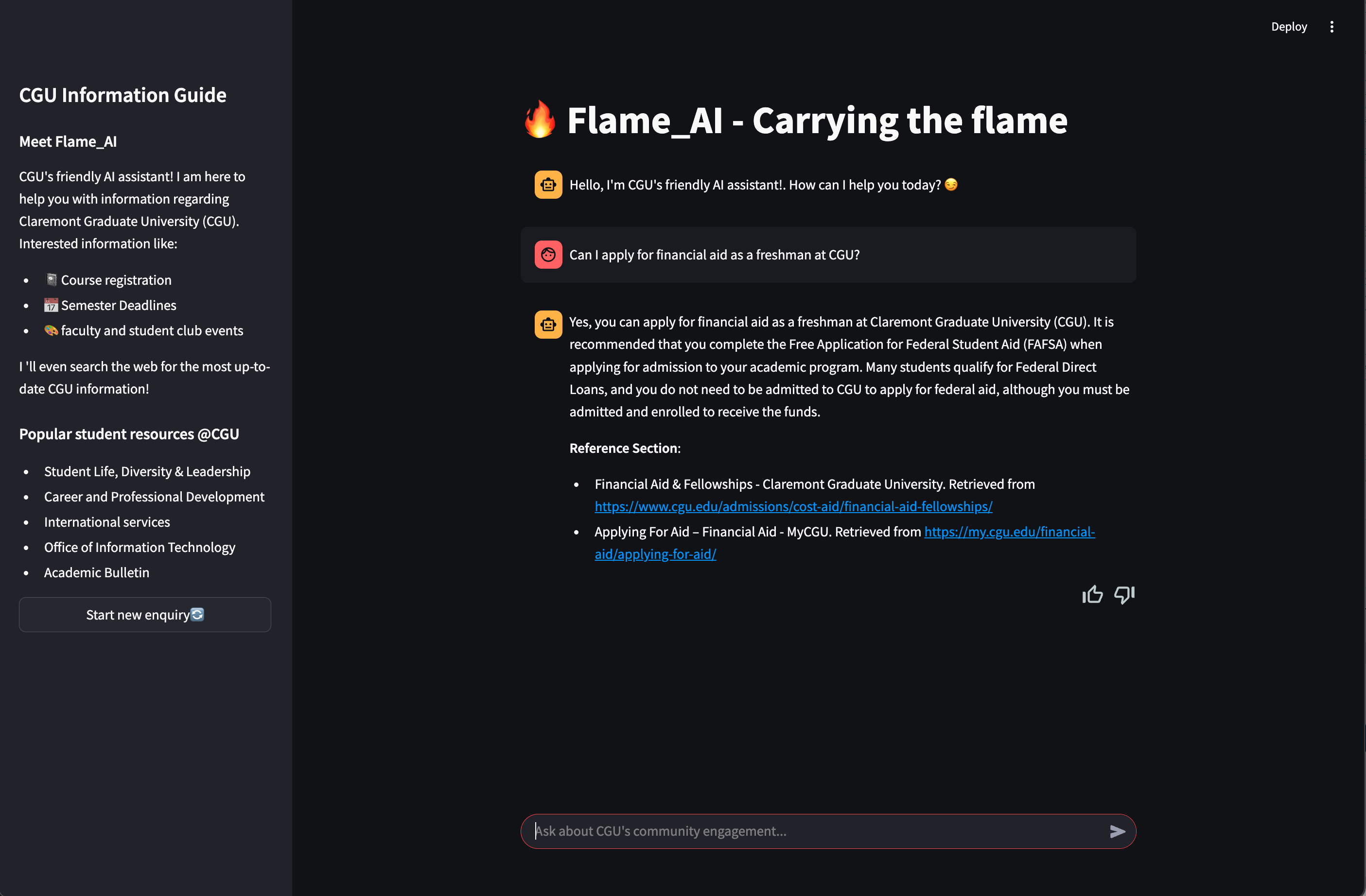
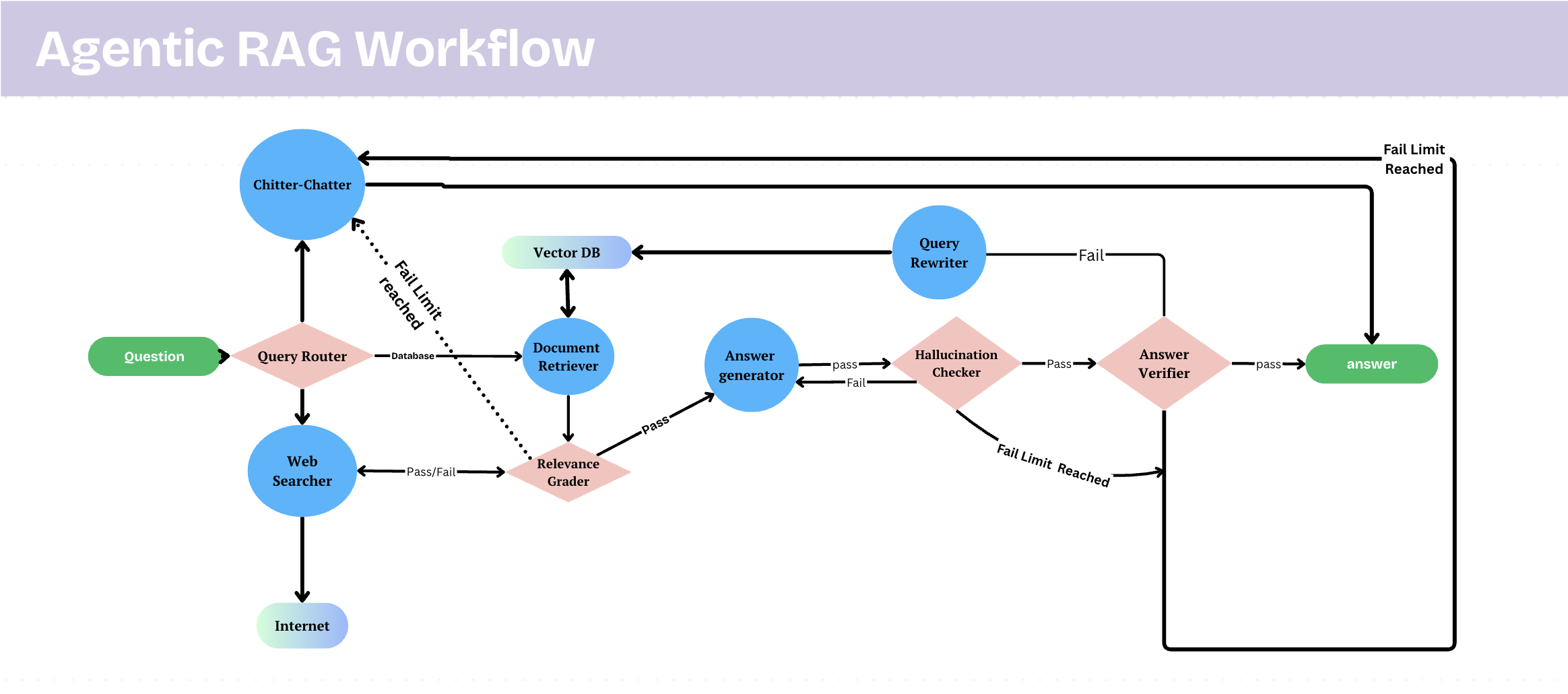
AI assistant for University students, staff, and alumni: This is an AI-powered agent, developed in collaboration with a team of graduate students and professors at the Center for Information Systems and Technology (CIST) department. The chatbot, named FlameAI, was designed to enhance campus engagement and accessibility by providing real-time, structured responses to inquiries related to Claremont Graduate University. Built using Streamlit, OpenAI's GPT-4o, LangChain, and the Tavily Search API, FlameAI integrates live search capabilities and custom prompt engineering to deliver accurate, up-to-date information about academic programs, student services, events, administrative resources, and more. The project showcases applied skills in generative AI, conversational design, and full-stack development. As part of its architecture, the chatbot employs retrieval-augmented generation (RAG) techniques, vector-based search tools, and prompt chaining for structured responses. It also features a user-friendly web interface and was developed with scalability and future customization in mind. FlameAI represents a meaningful step toward integrating responsible AI into educational institutions and reflects my interest in building impactful AI systems that improve access to information and user experience.
Key features:
- Conversational AI Agent – Developed an LLM-powered chatbot using LangChain to engage users in dynamic conversations
- Live Web Search Integration – Implemented Tavily Search API to provide the latest CGU-related information, granting the chatbot access to current information on the web, ensuring responses meant relevace goals.
- Custom Agent network – Powered the construction of a multi-agent conversational flow using LangGraph, Designed a structured reasoning framework to deliver context-aware responses, with autonomous agents to check and balance agents' responces.
- User-Friendly Web Application – Built with Streamlit framework, offering an intuitive interface for users to interact seamlessly.
- Secure and scalable – Securely loaded API keys and environment configurations, supporting best practices in secrets management and making the application easily portable across different environments (local, staging, production)
Project 2:
NAI: AI-Powered Career Evaluator (In progress...)
Project Description:
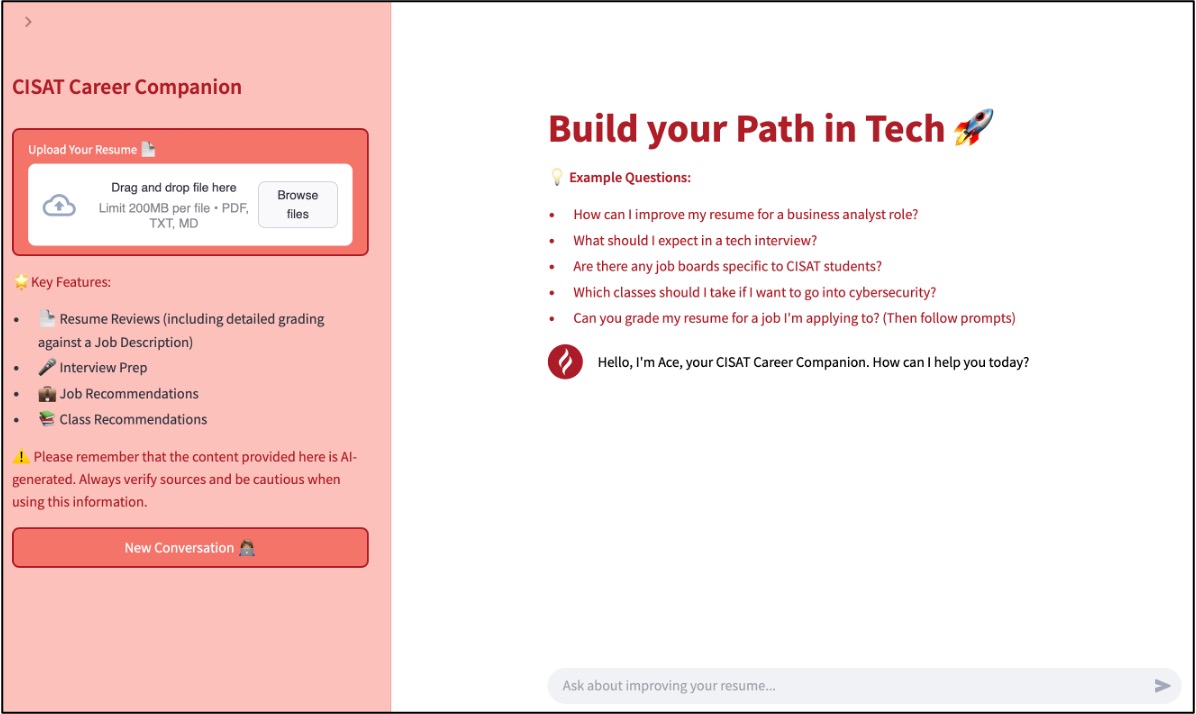
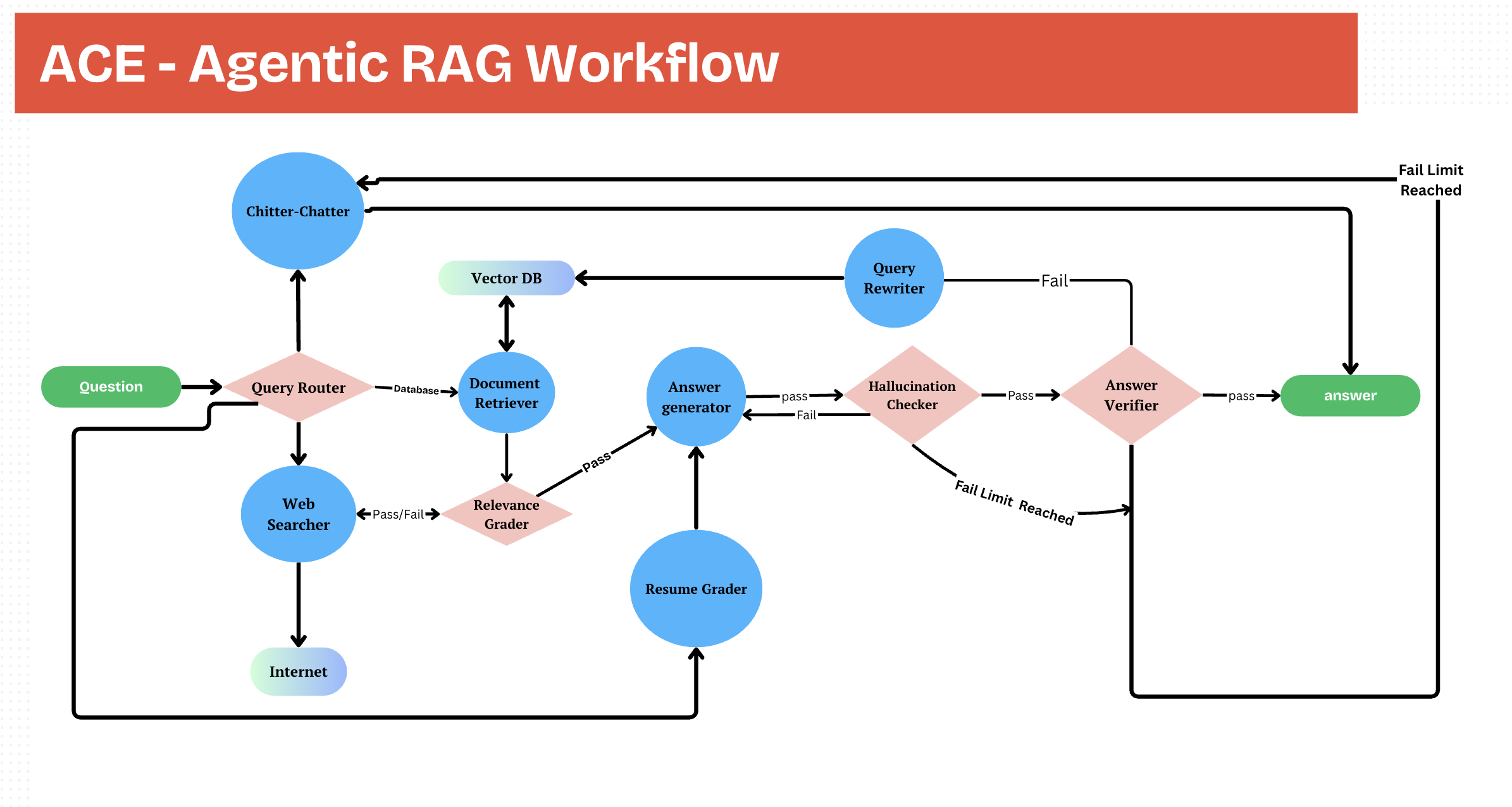
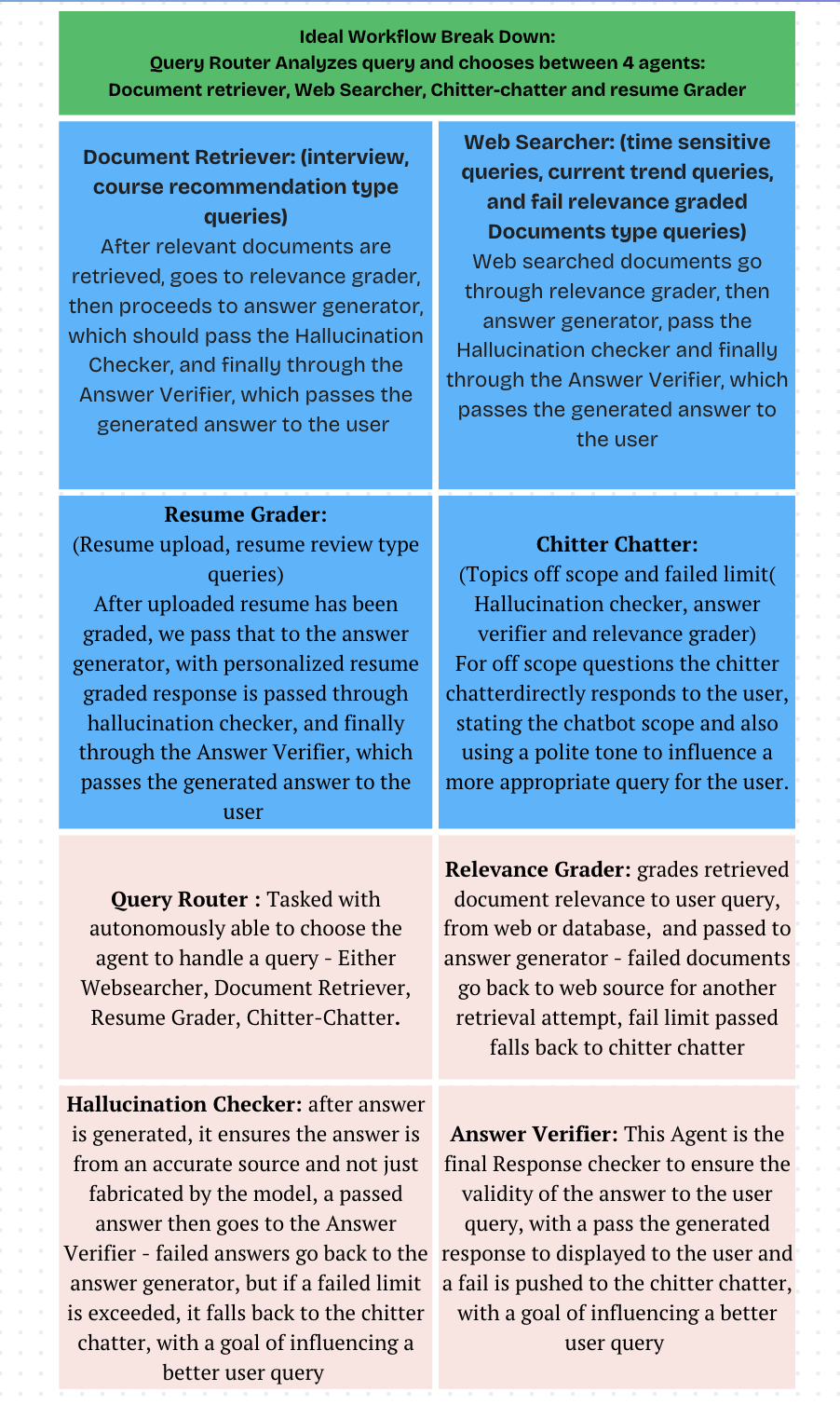
NAi is an intelligent, agentic chatbot developed to assist university students transitioning into the tech industry. Created through a collaborative effort with graduate peers and faculty at the Center of Information Systems and Technology, NAi functions as a personalized AI assistant offering resume feedback, interview preparation, and real-time insights into tech job markets. Built with Retrieval-Augmented Generation (RAG) and OpenAI’s GPT-4o and GPT-4o-mini, the chatbot delivers structured, relevant, and context-aware responses to support users at every stage of their career development. By combining natural language understanding, real-time semantic retrieval, and intelligent workflow orchestration, NAi bridges the gap between academic experience and industry expectations. It’s designed to simulate personalized guidance, emulate expert support, and scale with user needs, making it a robust solution for students navigating today’s competitive job landscape.
NAi's Key features:
- LLM Agent Framework: Integrated LangChain agents with OpenAI’s GPT-4o and GPT-4o-mini to enable real-time, multi-turn conversations grounded in role-specific guidance and context-aware decision making.
- Dynamic Prompt Engineering: Implemented modular and role-adaptive prompts, allowing the system to tailor responses for different tech roles (e.g., Data Analyst, AI Engineer, Software Developer), enhancing personalization.
- Retrieval-Augmented Generation (RAG): Combined PGVector with a custom document index to support semantic search, enabling accurate, up-to-date answers from curated resources like interview guides, resume templates, and job descriptions.
- Streamlit-Based UX: Built a responsive and user-friendly frontend using Streamlit, offering a clean and intuitive interface for real-time interaction, feedback display, and debugging support.
- LangSmith Feedback Integration: Integrated LangSmith tracing to monitor agent responses, track conversation flows, and continuously improve the quality and safety of model outputs based on user interactions.